Evaluating Alani: Is This Handwritten Font the Right Choice for Your Project?
In the vast landscape of typography, choosing the right typeface is a critical decision that shapes how a message is perceived. For projects requiring a personal, human touch, handwritten fonts are a popular category. Among the many options available, Alani presents itself as a versatile choice. This article provides a practical analysis of Alani, exploring its characteristics, ideal applications, and how it fits within the broader context of design needs, helping you determine if it aligns with your specific goals.
Understanding Alani's Core Character
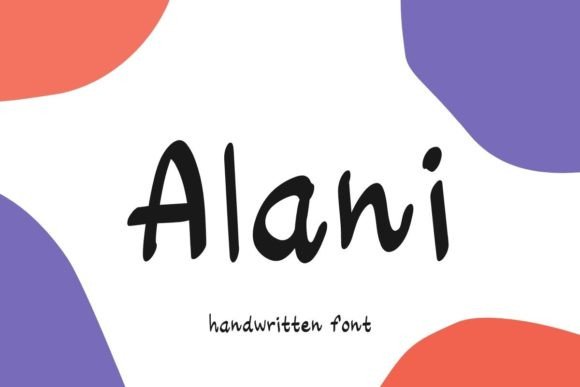
Alani is a handwritten font defined by its fluid, natural strokes that mimic the flow of actual handwriting. Its design strikes a balance between casual authenticity and structured legibility. Unlike some script fonts that can be overly ornate or difficult to read in smaller sizes, Alani maintains a clear letterform structure. This makes it more adaptable for practical applications where readability is non-negotiable, such as on letterheads or within body text of a stationery set. Its aesthetic is approachable and warm, avoiding the extremes of either stark formality or childish scribble.
The Distinct Appeal: Authenticity Meets Structure
What often sets a font like Alani apart is its ability to convey genuineness without sacrificing function. The subtle variations in letter height and baseline give it a handcrafted feel, which can be effective for brands aiming to project approachability and creativity. For example, in branding materials for a boutique bakery or a freelance designer, Alani can add a layer of personality that a standard sans-serif might lack. However, this very characteristic is also its primary tradeoff. The "handmade" quality, while appealing, may not convey the precision or authority needed for technical documents, legal contracts, or corporate communications where clarity and neutrality are paramount.
Practical Applications: Where Alani Fits Naturally
Evaluating a font's suitability requires matching its strengths to the project's demands. Alani's design lends itself well to specific creative contexts.
Effective Use Cases
- Titles and Headers: Alani can serve as an effective display font for short headlines, posters, or chapter titles, where its stylistic flair can be appreciated without overwhelming the reader.
- Logo and Branding Elements: For logos, especially in lifestyle, artisanal, or personal branding sectors, Alani can help create a distinctive mark. Its use is most effective when paired with a more neutral font for supporting text.
- Stationery and Invitations: The font is well-suited for personal stationery, wedding invitations, or event announcements where a handwritten feel is desired for its intimacy and charm.
- Short-Form Digital Content: It can be used effectively for quotes, social media graphics, or short call-to-action phrases on websites, provided the background and color contrast ensure high readability.
Situations Requiring Caution or Alternatives
There are clear scenarios where Alani might not be the optimal choice. Its handwritten nature can become a liability in long-form reading. Using it for extensive paragraphs in a report, an ebook, or a detailed brochure would likely cause reader fatigue. Similarly, in applications demanding high legibility at very small sizes—such as fine print on packaging, legal disclaimers, or dense data tables—a more geometric or humanist sans-serif font would be a more responsible selection. In these cases, the priority shifts from aesthetic appeal to unambiguous communication.
Comparing Alani to Other Typographic Approaches
When considering Alani, it's helpful to understand how it relates to other font categories and styles. This isn't about declaring one "better," but about recognizing different tools for different jobs.
Alani vs. Formal Script Fonts
Formal script fonts, often inspired by calligraphic traditions like Copperplate, tend to have more elaborate, connected letterforms and a stronger slant. They evoke elegance and formality, making them suitable for luxury branding or high-end invitations. Alani, by contrast, is generally more relaxed and less ornate. If your project requires a sense of upscale sophistication, a formal script might be preferable. If the goal is friendly, accessible creativity, Alani's style is often more appropriate.
Alani vs. Neutral Sans-Serifs
Neutral sans-serif fonts (like Helvetica, Arial, or Roboto) are the workhorses of modern design, prized for their clarity, versatility, and lack of stylistic baggage. They are the default for body text, user interfaces, and corporate identities where the message itself, not the font's personality, is the focus. Alani is not a replacement for these fonts; it is a complementary stylistic choice. A common and effective strategy is to use Alani for a headline or a logo wordmark, and then use a clean sans-serif for all other text, creating a balanced and readable hierarchy.
Decision Factors: Choosing Alani with Confidence
Making an informed decision involves weighing several practical considerations beyond just initial appeal.
- Audience and Context: Who will be reading this? A children's party invitation can handle more playful fonts than a financial advisory firm's annual report. Alani's casual tone resonates with audiences expecting creativity and personal connection.
- Readability Requirements: Always test the font at the intended size and in the intended medium. View a sample on a mobile screen, in print, and from a distance. If legibility suffers, another option is needed.
- Brand Consistency: Does this font align with the existing or desired brand voice? A font is a brand asset. Alani should feel like a natural extension of the brand's personality, not a stylistic outlier.
- Technical and Licensing Factors: Ensure the font's licensing covers your intended use (e.g., web embedding, merchandise). Also, verify it has the necessary character set for your language needs.
Conclusion: A Tool in the Typographic Toolbox
Alani is a competent and appealing handwritten font with clear strengths in adding personality and warmth to specific design elements. It is not a universal solution, and its value lies in its appropriate application. The most effective approach is to view it as one tool among many. For projects where a human touch enhances the message—such as in creative branding, personal stationery, or eye-catching titles—Alani is certainly worth evaluating. For contexts demanding neutrality, maximum readability, or formal authority, exploring other categories of fonts will yield better results. By focusing on the project's core communication needs rather than the font's trendiness, you can make a choice that serves both the design and the audience effectively.