Thursday: Integrating a Simple Bouncy Calligraphy Font into Your Creative and Professional Workflows
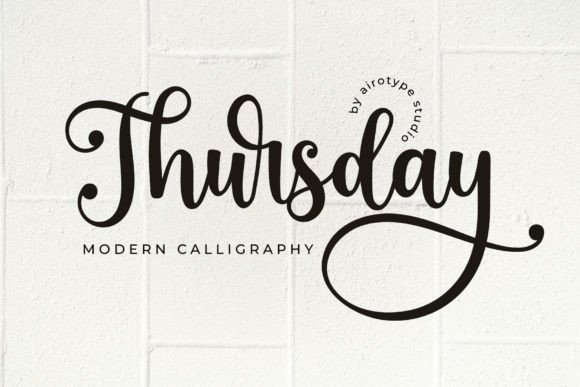
In the world of digital design and content creation, typography is not merely an aesthetic choice; it is a functional tool that dictates tone, readability, and user engagement. The selection of a typeface is a critical decision point in the planning phase of any project, influencing everything from brand perception to the efficiency of the production workflow. Among the vast library of available scripts, the Thursday font stands out as a specialized asset. It is a simple, bouncy calligraphy font characterized by its modern elegance and beautiful flow. While it possesses a distinct personality, its utility lies in how effectively it can be integrated into specific workflows, particularly those requiring a handwritten touch without sacrificing legibility.
Understanding the Functional Characteristics of Thursday
Before integrating any asset into a workflow, one must understand its technical and aesthetic properties. Thursday is defined by its "bouncy" baseline—a typographic feature where the letters do not sit on a perfectly straight horizontal line but rather dance slightly above and below it. This mimics the natural irregularity of handwriting, adding a human element to digital text. Unlike aggressive or overly complex calligraphy fonts that can hinder readability, Thursday prioritizes simplicity. Its letterforms are distinct, ensuring that the message remains clear even when used at smaller sizes.
From a process perspective, this simplicity translates to versatility. When a designer or content creator selects a font, they are often constrained by the medium. A highly ornate script might work for a wedding invitation but fail completely on a mobile interface or a busy T-shirt design. Thursday occupies a middle ground. It offers the warmth of a handwritten note but maintains the consistency required for professional output. This balance makes it a reliable choice for projects where the goal is to evoke a personal, approachable, or celebratory mood.
Preparation and Asset Management
Effective implementation begins with asset management. Before utilizing Thursday in a live project, it is essential to establish a system for font management. For freelancers and small business owners, maintaining a library of licensed fonts is a compliance requirement. Ensuring that the font files are organized and installed across all workstations prevents workflow bottlenecks.
Furthermore, preparation involves understanding the font’s licensing scope. If Thursday is intended for use in commercial products—such as merchandise, digital downloads, or branding materials—verifying the license is a non-negotiable step in the planning phase. This due diligence prevents legal complications later in the business lifecycle and ensures that the creative process remains uninterrupted.
Application in Event and Celebration Design
The most direct application of Thursday is in the design of event materials. The font’s aesthetic is inherently suited to celebrations. When designing wedding suites, birthday cards, or party invitations, the creative process often moves from concept to layout. Here, Thursday functions as the primary vehicle for emotion.
In a typical wedding workflow, the designer might start with a mood board to define the color palette and style. Once the direction is set, typography is selected to match the formality. Thursday fits seamlessly into rustic, bohemian, or modern minimalist themes. Its bouncy nature suggests joy and movement, making it ideal for headers and names on invitations. However, because calligraphy fonts can be difficult to read in long blocks, the workflow should dictate that Thursday be reserved for display text, while a clean serif or sans-serif font is paired with it for body copy. This pairing strategy ensures that the design is both beautiful and functional.
Sublimation and Physical Production
For those involved in physical production, such as sublimation printing or crafting, the integration of Thursday involves technical verification. When preparing artwork for T-shirts, mugs, or stickers, the vectorization and cutting process is critical. Fonts with excessive swashes or thin, delicate strokes can sometimes cause issues with vinyl cutters or result in blurry prints on textured fabrics.
Thursday’s design emphasizes simplicity, which generally translates to cleaner cut lines and more reliable sublimation transfers. However, a quality control step is still necessary. Creators should always run a test cut or a sample print to ensure that the "bounce" of the letters does not create awkward negative spaces when applied to a physical object. This step—testing the asset in the specific production environment—is a crucial part of the execution process that saves time and materials.
Digital Marketing and Brand Voice
In the digital realm, the use of Thursday extends beyond static images. For marketers and bloggers, font selection is a component of brand voice. A brand that wishes to convey authenticity and approachability might use a bouncy calligraphy font for social media graphics, email headers, or featured images.
When integrating Thursday into a digital marketing workflow, consistency is key. The font should be applied systematically across specific types of content to build recognition. For example, a content creator might use Thursday exclusively for "Quote of the Day" graphics or sale announcements. This creates a visual shorthand for the audience; they immediately recognize the tone of the content based on the typography.
However, usability in digital spaces requires attention to responsive design. While Thursday may look stunning on a desktop monitor, its legibility on smaller mobile screens must be assessed. A practical workflow tip is to preview designs at 100% scale on mobile devices before publishing. If the "bouncy" baseline makes the text difficult to read at small sizes, the designer should adjust the font size or limit the font's use to larger display headings where the style can be appreciated without sacrificing clarity.
Integration with Other Design Elements
No font exists in a vacuum. The effectiveness of Thursday depends on how it interacts with other design elements, such as imagery, texture, and complementary typefaces. In a layout, contrast is the primary tool for directing the viewer's eye.
Because Thursday is organic and fluid, it pairs well with structured, geometric sans-serif fonts. This contrast creates a visual hierarchy that guides the reader through the content. For instance, in a brochure or a slide deck, using Thursday for the main headline creates a focal point of warmth, while a font like Montserrat or Open Sans for the body text ensures that the information is delivered efficiently.
Additionally, the color palette plays a role in the font's performance. Bouncy calligraphy often stands out best against clean backgrounds. If the background involves heavy texture or complex photography, the text may need a semi-transparent overlay or a drop shadow to ensure it remains the primary focus. This consideration of "readability over aesthetics" is a hallmark of professional design execution.
Long-Term Use and Workflow Efficiency
For professionals who produce a high volume of content—such as educators creating lesson materials or entrepreneurs developing product lines—efficiency is paramount. Once Thursday is established as a standard asset in the toolkit, it can be pre-loaded into templates.
Creating a library of templates that utilize Thursday for specific functions (e.g., "Instagram Story - Flash Sale" or "Event Header - Formal") streamlines the creation process. Instead of selecting fonts and adjusting kerning and leading from scratch for every new project, the creator simply opens the template and updates the text. This standardization reduces decision fatigue and speeds up the turnaround time for deliverables.
Furthermore, as trends in design shift, the simplicity of Thursday ensures its longevity. While overly trendy fonts can look dated within a year, a classic bouncy script remains relevant. This durability makes it a sound investment of time and resources, as the assets created with it today will likely remain visually appealing in the future.
Observations on Usability
It is worth noting that while Thursday is "simple," calligraphy fonts generally require more attention to typographic details than standard block letters. Users may need to manually adjust the tracking (letter spacing) or leading (line spacing) to ensure the ascenders and descenders of the bouncy letters do not collide. This micro-adjustment is part of the refinement stage of the design process. Ignoring these details can result in a cluttered look, whereas careful adjustment enhances the font's natural elegance.
Conclusion
Thursday is more than just a collection of glyphs; it is a stylistic tool that, when used correctly, enhances the emotional resonance of a project. Its value lies in its ability to bridge the gap between digital precision and human warmth. By understanding its characteristics, planning for its application, and rigorously testing its output across various media, creators and professionals can leverage Thursday to produce work that is not only visually beautiful but also strategically effective. Whether for a wedding invitation, a T-shirt design, or a digital marketing campaign, integrating this font is an exercise in balancing creativity with practical execution.