Integrating Marble Crimson into Your Design Workflow
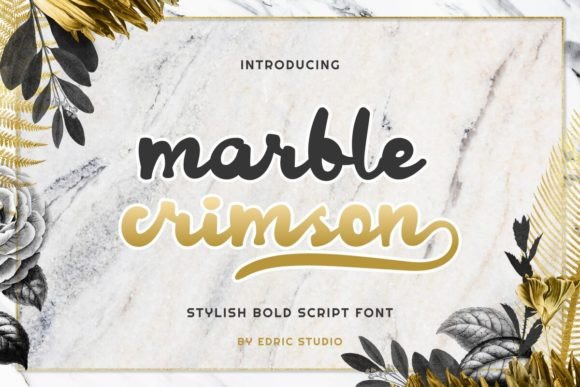
Effective design is not just about choosing a beautiful element; it is about understanding how that element functions within a larger system. When selecting a typeface, the decision impacts brand identity, readability, and the emotional resonance of the final product. Marble Crimson, a stylish script font created by EdricStudio, offers a specific aesthetic solution: a bold, natural, and classy handwriting look. While its visual appeal is immediate, its true value lies in how seamlessly it can be integrated into professional workflows across various industries—from fashion and furniture to publishing and wedding planning.
Understanding the Asset: Beyond Aesthetics
Before deploying any new font, a professional must evaluate its technical capabilities. Marble Crimson is designed as a bold script, meaning it carries significant visual weight. This makes it distinct from lightweight calligraphy fonts often used for body text. It is a display font, intended to capture attention. The asset includes a comprehensive character set—uppercase and lowercase letters, numbers, punctuation, and symbols—ensuring that it can handle complex titling requirements without missing glyphs. Furthermore, the inclusion of ligatures and a Swoosh adds a layer of sophistication, allowing for custom connections between letters that mimic authentic penmanship.
For the user, this technical foundation dictates where the font fits in the creative process. It is not a tool for writing long paragraphs; it is a tool for impact. Whether you are a small business owner designing a logo or a freelancer creating a poster, the first step in implementation is recognizing Marble Crimson as a headline or accent font. Its "well-spaced and kerning" management suggests that the designer has already handled the micro-level adjustments of character spacing, allowing you to focus on macro-level layout and composition.
Strategic Placement in the Creative Process
Integrating a font like Marble Crimson requires a structured approach to project planning. It is rarely the first thing you choose, nor should it be an afterthought. Typically, the workflow follows a logical progression: concept, color palette, imagery, and finally, typography.
Phase 1: Pre-Production and Concept Alignment
During the planning stage, you must determine if the "natural and classy" aesthetic of Marble Crimson aligns with your project's goals. For a wedding organizer, this might involve matching the font's flow with the formality of the event. For a homeware brand, it might be about evoking a sense of craftsmanship. This is the time to gather visual references. If your mood board leans toward modern minimalism or heavy industrialism, a bold script might clash. However, if the direction is organic, luxurious, or artisanal, this font becomes a strong candidate.
Phase 2: Execution and Layout
Once the concept is solid, the execution phase begins. Here, Marble Crimson interacts with other design assets. A common pitfall in design is pairing two distinct fonts that compete for attention. Because Marble Crimson has a bold weight and decorative style, it requires a quiet partner. In your workflow, pair it with a clean, geometric sans-serif or a classic serif font for subheadings and body copy. This contrast creates a hierarchy that guides the viewer’s eye naturally.
Consider the context of a restaurant menu or a boutique label. The layout process involves more than just placing text; it involves managing negative space. Because the font is bold, it requires breathing room. Crowding Marble Crimson into tight margins will result in legibility issues. Practical implementation involves testing the font at various sizes early in the design phase to ensure that the details of the script do not blur or fill in when scaled down for smaller applications like stationery or labels.
Workflow Applications Across Industries
The versatility of Marble Crimson allows it to serve different functions depending on the industry application. The key to successful implementation is tailoring the font usage to the specific medium.
Publishing and Editorial Design
For publishers and bloggers, typography sets the tone before a single word is read. Using Marble Crimson for chapter titles or pull quotes can break the monotony of standard text layouts. In a digital workflow, this involves ensuring the font is web-optimized and loaded correctly to prevent layout shifts. In print, it involves checking the ink spread, as bold scripts can sometimes lose definition on absorbent paper stocks.
Fashion and Accessories
In the fashion industry, branding is paramount. Marble Crimson can be utilized to create a distinct voice for a clothing line or accessory brand. It works effectively on hang tags, lookbooks, and social media assets. The workflow here involves creating templates. By setting up master pages or design systems that utilize Marble Crimson for the primary headers, you ensure brand consistency across all touchpoints, from Instagram stories to website banners.
Events and Stationery
For wedding organizers and event planners, the font serves as a bridge between the invitation and the event itself. It can be used to generate a cohesive suite of materials—save-the-dates, menus, and signage. The "Swoosh" feature of the font is particularly useful here, allowing designers to add decorative tails to specific letters for an extra touch of elegance. This requires a manual workflow step: reviewing the text to decide where these stylistic alternates best fit without overcrowding the design.
Technical Integration and Efficiency
Efficiency in design comes from understanding your tools. Marble Crimson is designed to be "perfectly managed," but the user still needs to manage the context. When installing the font, organizing your font library is a crucial step. Labeling it clearly within your font manager ensures you can quickly access it during brainstorming sessions.
Moreover, consider the output. If you are screen printing quotes onto merchandise, the bold nature of Marble Crimson is advantageous, as it translates well to ink. However, you must vectorize the text to ensure clean edges. If you are using the font for digital titles, rasterization is less of a concern, but file size and load times become relevant. Optimizing the font for web use by subsetting—removing unused characters to reduce file size—can improve site performance, a critical factor for e-commerce businesses selling furniture or perfume.
Quality Control and Long-Term Use
The final stage of any workflow is quality control. With a script font like Marble Crimson, legibility is the primary metric. It is easy to fall in love with the style and overlook the function. Before finalizing a project, print a test copy or view it on multiple screen sizes. Ask: Is the text readable at a glance? Does the "natural handwriting" look translate to the medium, or does it look distorted?
Long-term use of a font like Marble Crimson relies on restraint. Overuse can dilute its impact. By reserving it for key moments—logos, hero images, or specific headers—you maintain its "classy" appeal. It becomes a signature element of your visual identity rather than a background noise. By integrating it thoughtfully into your process, respecting its technical specifications, and pairing it with complementary assets, Marble Crimson becomes more than just a font; it becomes a functional component of a successful design strategy.