Why Metrics Typeface Is the Secret Weapon for Elegant Design
In the vast and often overwhelming world of typography, finding a font that balances exclusivity with versatility is like striking gold. Whether you are a graphic designer working on a high-end brand identity, a web developer curating the perfect user interface, or a content creator looking to make your headers pop, the choice of typeface dictates the tone of your entire project. Among the myriad of options available today, Metrics has emerged as a standout choice. It is not merely a collection of letters; it is a design statement that brings a distinct touch of elegance and modernity to any visual medium.
Understanding the Appeal of the Metrics Font
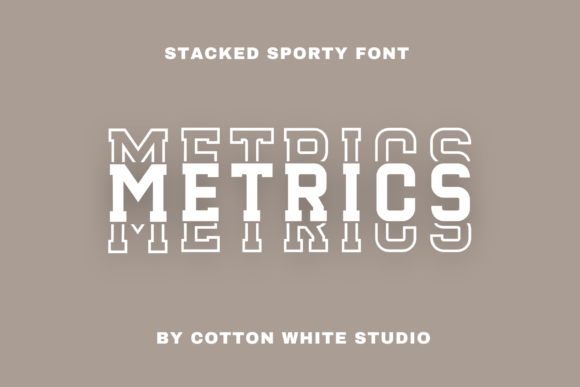
At its core, typography is about communication, but it is also about emotion. When we talk about Metrics, we are discussing a font family that leans heavily into geometric precision and aesthetic refinement. Unlike standard system fonts that can feel generic or utilitarian, Metrics offers a fresh perspective on letterforms. It captures a sense of exclusivity that is often hard to find in open-source or mass-market typefaces.
The primary allure of Metrics lies in its ability to command attention without shouting. It possesses a quiet confidence that makes it perfect for headings and titles. When a user lands on a webpage or picks up a brochure, the headline is the first thing they see. If that headline is set in a mundane font, the opportunity to create an immediate emotional connection is lost. Metrics solves this problem by providing a visual hook that is both attractive and professional.
What Makes a Font "Exclusive"?
It is worth pausing to consider what makes a typeface feel exclusive. It is not necessarily about a high price tag, but rather about the care put into the design details. In the case of Metrics, the "exclusivity" comes from its unique character shapes and the subtle nuances in its curves and terminals. It avoids the sterile, robotic feel of some geometric sans-serifs while also steering clear of the chaotic clutter of overly decorative fonts. This balance creates a "premium" feel that elevates the perceived value of the content it displays.
The Anatomy of Elegance: Design Characteristics
To truly appreciate why Metrics is an attractive choice, we must look at its design DNA. The font is characterized by clean lines and a structured rhythm, yet it retains a humanist warmth that makes it approachable.
- Geometric Harmony: Metrics often utilizes geometric shapes—circles, squares, and triangles—as the foundation for its letters. This creates a sense of order and stability, which is visually pleasing to the human eye.
- Refined Details: The small touches, such as the tail of the 'Q', the arch of the 'a', or the crossbar of the 'e', are crafted with precision. These details might go unnoticed by the casual observer, but they contribute significantly to the overall "texture" and feel of the design.
- Weight Variations: A versatile font must offer a range of weights, from delicate thin strokes to bold, impactful heavy weights. Metrics excels here, allowing designers to create hierarchy and contrast easily. A thin weight might be used for subtitles, while a heavy weight creates a dominant, powerful header.
Practical Relevance: Why You Should Use Metrics Today
While aesthetics are subjective, the practical applications of a font like Metrics are universal. In the modern digital landscape, readability and brand distinctiveness are paramount. Metrics serves both of these needs effectively.
1. Dominating the Digital Space
On screens, clarity is king. Fonts that are too intricate can become pixelated or difficult to read at smaller sizes. However, since Metrics is designed primarily for headings and titles, it shines in high-resolution digital environments. Imagine a landing page for a luxury tech product or a high-fashion blog. Using Metrics for the hero text immediately signals to the visitor that this brand cares about quality and aesthetics. It sets a mood that standard fonts like Arial or Times New Roman simply cannot achieve.
Furthermore, in the realm of UI/UX design, typography is a functional tool. Metrics helps in creating a clear visual hierarchy. By using Metrics for primary call-to-actions (CTAs) and section headers, you guide the user's eye naturally down the page, improving the overall user experience.
2. Elevating Print Media
Despite the digital revolution, print is far from dead. Business cards, wedding invitations, magazine covers, and luxury packaging rely heavily on tactile appeal. Metrics is perfectly suited for print media because of its clean vector construction. When printed at large sizes, the elegance of the curves becomes even more apparent. For a business card, a name written in Metrics conveys a sense of authority and style. For a magazine cover, it provides a modern edge that catches the eye on a crowded newsstand.
3. Branding and Logo Design
A logo is the face of a brand, and the typeface chosen for it must be timeless yet contemporary. Metrics offers the neutrality required for longevity, but with enough character to be distinctive. Many modern startups and creative agencies are moving away from overly complex logos in favor of clean, typographic wordmarks. Metrics provides the perfect foundation for such designs, ensuring the brand looks professional across all platforms, from a favicon to a billboard.
Metrics in Modern Life and Work
We are surrounded by design, often without realizing it. The font on your morning coffee cup, the header of the news article you read on the train, and the interface of the app you use to track your fitness all play a role in your daily experience. Metrics fits into this ecosystem by providing a solution for "premium" communication.
For business professionals, using a font like Metrics in presentations or reports can subconsciously influence how the information is received. A well-designed slide deck using an elegant typeface suggests that the content within is equally well-researched and professional. It is a subtle form of non-verbal communication that builds trust.
In education and creativity, the tools we use shape our output. For students of design, studying Metrics can be an educational experience in itself. It teaches the principles of balance, spacing (kerning), and weight distribution. For creative writers or poets publishing their work, the choice of Metrics for the cover or chapter headings can frame the text, giving it a modern, artistic context.
Addressing Common Misunderstandings
There is a common assumption that "elegant" or "exclusive" fonts are difficult to use or pair with other typefaces. This is a misconception that often holds designers back.
Myth: Elegant fonts are only for luxury brands.
Reality: While Metrics certainly suits luxury branding, its versatility allows it to be used in corporate, tech, and even casual contexts. The key is in the pairing. If you pair Metrics with a clean, readable sans-serif for body text (like Open Sans or Roboto), it can fit into almost any design system.
Myth: Decorative fonts are bad for SEO and accessibility.
Reality: This is partially true for body text. If you use a highly stylized font for paragraphs, it can hurt readability and SEO rankings. However, because Metrics is best used for headings and titles, it does not negatively impact the readability of the main content. Search engines primarily index the text content, not the font file, provided the text remains selectable and accessible. Using Metrics for H1 and H2 tags is a safe and effective strategy.
How to Integrate Metrics into Your Workflow
If you are convinced of the value Metrics can bring to your projects, integrating it is the next step. Here is a simple approach to getting started:
- Identify the Hierarchy: Look at your current project. Where are the opportunities to create contrast? Usually, this is in the page title, section headers, or pull quotes.
- Test Pairings: Metrics is a strong personality. It needs a partner that supports it without competing. Choose a neutral body font. A classic serif or a simple sans-serif usually works best.
- Focus on Spacing: Elegant fonts often benefit from a little extra breathing room. If you are using Metrics for a headline, try slightly increasing the letter-spacing (tracking). This enhances the feeling of luxury and exclusivity.
- Consistency is Key: Once you decide to use Metrics, apply it consistently across your headers to build a cohesive visual identity. Don't switch between three different header fonts; let Metrics do the heavy lifting.
Conclusion: The Power of the Right Typeface
Typography is the voice of design. Choosing a font is not just about picking letters that look "cool"; it is about selecting a tool that communicates the right message to your audience. Metrics stands out in the crowded type market because it successfully bridges the gap between attraction and function.
It offers the exclusivity needed to make a brand feel special, the elegance required for sophisticated design projects, and the versatility to work across both digital and print media. Whether you are designing a website for a new startup, laying out a brochure for a gallery, or creating a presentation for a board meeting, incorporating Metrics into your typography toolkit is a strategic move. It transforms ordinary headers into captivating visual elements, ensuring your message is not just read, but remembered.
By understanding the nuances of this font and applying it thoughtfully, you can elevate your design work from functional to exceptional. In a world where visual noise is constant, the clarity and elegance of Metrics provide a refreshing and professional respite.