Strategic Clarity: How the Fountain Pen Font Shapes Perception and Outcome
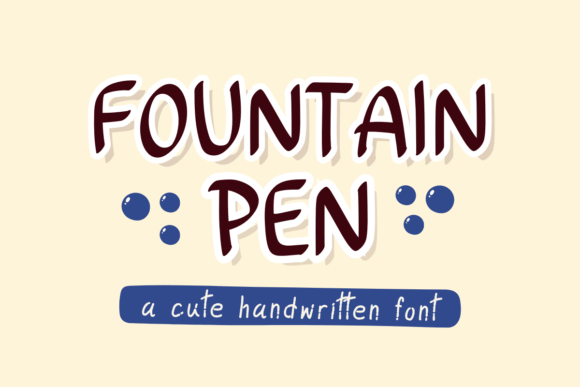
In the landscape of digital communication, the decision to use a specific typeface is rarely just aesthetic; it is a strategic choice that dictates tone, hierarchy, and audience engagement. Among the myriad options available, the Fountain Pen font emerges as a distinct tool for creators and professionals. Described as a cute, handwritten style that is both simple and charming, Fountain Pen offers a versatility that extends far beyond mere decoration. For entrepreneurs, educators, and marketers, understanding how to deploy this font effectively can bridge the gap between a message that is merely seen and one that is truly felt.
Understanding the Visual Psychology of Fountain Pen
The core utility of the Fountain Pen font lies in its ability to humanize digital content. In an era dominated by rigid sans-serifs and sterile corporate templates, a handwritten font introduces a tactile warmth that commands attention through contrast. However, it is vital to distinguish between "cute" and "childish." While Fountain Pen possesses a playful simplicity, its charm is rooted in approachability rather than immaturity. This makes it a strategic asset for professionals who wish to lower barriers between themselves and their audience. When a small business owner uses Fountain Pen on a thank-you card or a product tag, they are not just labeling an item; they are simulating a personal connection that standardized fonts cannot replicate.
For the decision-maker, the psychology is clear: Fountain Pen signals authenticity. It suggests that a human hand was involved in the creation of the message, which can increase trust. This is particularly relevant for freelancers and consultants whose personal brand is their primary currency. By utilizing a font that mimics natural handwriting, you subtly communicate that your work is bespoke and attentive to detail, rather than mass-produced.
Strategic Application: From Crafts to Corporate Identity
The versatility of Fountain Pen is one of its strongest strategic assets. It is a tool that adapts to the context in which it is placed, provided the user understands the environment. In the realm of education and child-centric industries, the font serves a functional purpose: readability. Teachers creating worksheets or parents designing party invitations can rely on Fountain Pen to deliver legibility without the rigidity of standard block letters. The "cute" factor here is a strategic choice to create an inviting atmosphere that encourages engagement from younger audiences.
However, the application broadens significantly for marketers and content creators. Consider the following scenarios where Fountain Pen becomes a strategic tool rather than just a design element:
- Greeting Cards and Direct Mail: In a stack of bills and junk mail, a handwritten-style envelope stands out. Using Fountain Pen for the address or the internal message increases the likelihood of the piece being opened and read, directly impacting campaign ROI.
- Product Packaging: For artisans and small business owners, packaging is the first physical touchpoint. Fountain Pen can be used to create labels that convey a "homemade" or "artisanal" quality, justifying a premium price point through visual storytelling.
- Digital Headers and Callouts: On a website or blog, body text must be functional (usually a sans-serif or serif). However, using Fountain Pen for pull quotes or section headers can break the monotony of the page, guiding the reader’s eye to key takeaways without disrupting the reading flow.
Decision-Making and Contextual Awareness
While the Fountain Pen font offers significant charm, relying on it without a clear strategy can dilute a message or confuse a brand’s positioning. The decision to use this font should be rooted in an understanding of your audience's expectations and the specific goal of the communication. For instance, while Fountain Pen is excellent for a bakery’s menu or a boutique’s social media graphics, it would likely undermine the authority of a law firm’s legal brief or a medical report. The "cute" descriptor associated with the font implies a level of informality that must align with the subject matter.
Before implementing Fountain Pen, consider the hierarchy of information. Is the text meant to be the centerpiece of the design, or is it supplementary? Because of its distinct personality, Fountain Pen works best when it is given room to breathe. It thrives in headlines, logos, and short bursts of text where the letterforms can be appreciated. Conversely, using it for long-form body copy can lead to cognitive fatigue for the reader, as handwritten fonts are generally harder to scan than traditional typefaces. Therefore, a hybrid approach—pairing Fountain Pen with a clean, neutral font—is often the most effective way to balance personality with professionalism.
Planning for Long-Term Brand Consistency
For entrepreneurs and creators building a brand over time, consistency is the bedrock of recognition. If you choose to integrate Fountain Pen into your visual identity, it must be done with foresight. This font should not be a random choice made for a single project; it should be a deliberate component of your brand’s voice. If your brand values are centered around creativity, warmth, community, and accessibility, Fountain Pen can serve as a visual anchor for those values.
However, be wary of trend-chasing. Handwritten fonts go in and out of style, but a classic, well-crafted handwritten font like Fountain Pen tends to endure because of its simplicity. To ensure longevity, use it selectively. Perhaps it becomes the signature font for your "Thank You" notes to clients, or the exclusive typeface for your "Quote of the Week" social media series. By assigning a specific function to the font, you create a ritual that your audience begins to recognize and expect, strengthening the association between the visual style and the value you provide.
Avoiding the Pitfalls of Over-Personalization
There is a fine line between charming and chaotic. One of the risks of using a font like Fountain Pen is the potential for over-personalization, which can make a professional entity look unstructured. If a freelancer uses Fountain Pen for every element of their website—from the navigation bar to the terms of service—it can create an impression of amateurism. The strategic user understands that a font is a tool for emphasis, not a blanket solution.
Furthermore, accessibility must be considered. While Fountain Pen is legible for short bursts, users with visual impairments or dyslexia may find handwritten styles more challenging to parse than standard fonts. Therefore, strategic planning involves ensuring that your use of Fountain Pen does not exclude any part of your audience. This might mean ensuring high contrast between the text and background, or offering a "plain text" version of essential documents.
Practical Tips for Implementation
To maximize the impact of Fountain Pen, treat it as a highlighter rather than a foundation. Use it to draw attention to the most critical part of your message. When designing a greeting card, let the main sentiment be in Fountain Pen, but keep the date, time, and location in a clean, legible typeface. When creating a presentation, use Fountain Pen for slide titles to inject personality, but stick to a standard font for the bullet points to ensure data is easily digestible.
Ultimately, the Fountain Pen font is a strategic ally for those who wish to communicate with a human touch. It is a reminder that behind every business, every blog post, and every greeting card, there is a person. By using it intentionally, with a clear understanding of its strengths and limitations, you can transform a simple design element into a powerful tool for connection and engagement. Whether you are a teacher trying to make learning fun or a business owner trying to stand out in a crowded market, Fountain Pen offers a simple, charming solution to the complex problem of capturing attention.