Exploring the Visual Language of Wedding Pairing: A Modern Approach to Display Typography
In the realm of visual communication, the choice of typeface dictates the emotional response of the audience before a single word is comprehended. Typography is not merely a vessel for text; it is a design element that carries weight, tone, and personality. Among the vast library of typefaces available to designers today, display fonts hold a special place for their ability to command attention and set a scene. Specifically, Wedding Pairing has emerged as a notable contender in this category, offering a distinct blend of contemporary style and functional elegance. This article explores the anatomy, application, and technical considerations of this font, providing a comprehensive guide for professionals and hobbyists alike.
The Anatomy of a Modern Display Font
To understand the value of Wedding Pairing, one must first dissect what constitutes a "bold, fresh display font." Display typefaces are designed for short-form text settings, such as headlines, posters, and logos, rather than for body text. They are intended to be impactful at large sizes. Wedding Pairing distinguishes itself through a specific set of stylistic choices that align with current design trends while maintaining a timeless structure.
Characteristics of the Style
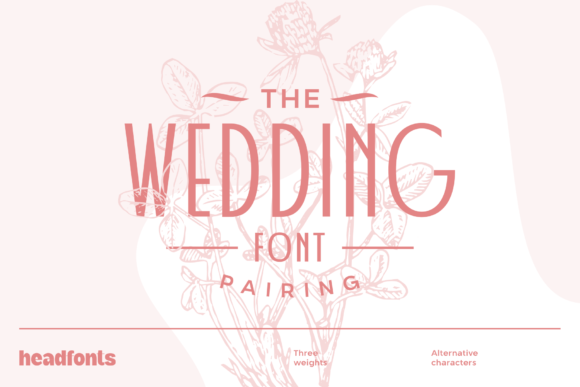
The defining traits of Wedding Pairing revolve around its "fresh" aesthetic. This usually implies a departure from rigid, geometric sans-serifs or stuffy, traditional serifs. Instead, this font likely features:
- High Contrast Strokes: Many modern display fonts utilize a variation in thickness between the thick and thin parts of the letterforms. This creates a dynamic rhythm that is pleasing to the eye.
- Variable Baselines: To achieve the "pairing" effect often associated with wedding aesthetics, the font may include stylistic alternates that allow letters to connect or overlap in a script-like fashion, mimicking the flow of hand-lettering.
- Generous Spacing: Unlike text fonts that are tightly spaced for readability in paragraphs, display fonts like Wedding Pairing often benefit from increased tracking (letter spacing) to let the design details breathe.
- Trend-Aware Ligatures: The font likely supports special ligatures—where two or more letters are combined into a single glyph—to add a custom, bespoke feel to the typography without requiring manual vector manipulation.
Practical Applications Across Industries
The versatility of Wedding Pairing extends far beyond its namesake. While it is perfectly suited for matrimonial stationery, its utility spans a broad spectrum of creative and professional industries. Understanding where and how to deploy this font is key to maximizing its potential.
Crafting and Physical Stationery
For the hobbyist and the professional stationer, Wedding Pairing serves as a foundational tool for physical goods. In the world of crafting, legibility and aesthetic appeal must coexist.
- Greeting Cards: Whether for birthdays, holidays, or thank-you notes, the bold nature of the font ensures the message is the focal point. Its "trendy" quality keeps the designs looking current.
- Scrapbooking: The font can be used for headers and titles in scrapbooks, providing a polished look that complements photographs.
- Signage: For events such as weddings or corporate gatherings, Wedding Pairing can be used to create welcome signs, menu boards, and place cards. Its bold weight ensures visibility from a distance.
Digital Design and User Interfaces
In the digital landscape, screen resolution and user attention spans dictate design choices. Wedding Pairing addresses both by offering high legibility and immediate visual impact.
- Website Hero Sections: The "above the fold" area of a website requires a strong hook. Using Wedding Pairing for the main H1 headline can instantly communicate the brand's personality, whether it is luxury, whimsy, or modern minimalism.
- Social Media Graphics: Platforms like Instagram and Pinterest are heavily visual. Quotes, announcements, and promotional banners benefit from the font's fresh aesthetic, helping content stand out in a crowded feed.
- Presentation Decks: Business professionals often struggle to make slide decks engaging. Replacing standard system fonts with Wedding Pairing for slide titles can elevate the perceived quality of the presentation.
Strategic Pairing and Composition
A display font rarely works in isolation. The "pairing" in Wedding Pairing alludes to its potential to work alongside other typefaces. However, creating a harmonious typographic hierarchy requires strategic planning.
Contrast is Key
The primary rule of font pairing is contrast. Because Wedding Pairing is bold, fresh, and likely features decorative elements, it should be paired with a neutral, highly legible typeface for body text.
- Sans-Serif Companions: Fonts like Open Sans, Roboto, or Lato provide a clean, modern backdrop that allows Wedding Pairing to shine without overwhelming the viewer.
- Serif Companions: For a more editorial or classic look, pairing Wedding Pairing with a transitional serif like Georgia or Baskerville can create a sophisticated tension between the modern display font and the traditional text font.
Avoiding Visual Clutter
When using a font with as much personality as Wedding Pairing, it is crucial to avoid competing design elements. If the typography is the star of the show, the surrounding graphics should be subtle. Minimalist layouts with ample white space allow the details of the font—the serifs, the curves, and the ligatures—to be appreciated fully.
Technical Considerations for Implementation
For designers and developers, the technical performance of a font is just as important as its visual appeal. Implementing Wedding Pairing requires an understanding of file formats, licensing, and rendering.
File Formats and Web Performance
When using Wedding Pairing for web design, the Web Open Font Format (WOFF and WOFF2) is the standard. These formats are compressed to ensure faster loading times, which is a critical factor for SEO and user experience.
- Subsetting: If the project only requires English characters, designers can use "subsetting" to remove unused glyphs (such as other language support) from the font file. This significantly reduces the file size of Wedding Pairing, improving site speed.
- Fallback Fonts: Always define a web-safe fallback font in the CSS stack. If Wedding Pairing fails to load due to network issues, the site should still be readable with a generic serif or sans-serif font.
Licensing and Usage Rights
Understanding the license associated with Wedding Pairing is non-negotiable for professional use. Most fonts come with specific End User License Agreements (EULA) that dictate how the font can be used.
- Desktop vs. Web vs. App: A desktop license allows for print design and logos. A web license covers embedding the font in a website's CSS. An app license is required for embedding the font in mobile software. Ensure the license for Wedding Pairing covers the specific medium of your project.
- Commercial Projects: While free fonts are tempting, they often lack the quality control and legal safety of premium fonts like Wedding Pairing. For business owners, investing in a proper license protects against copyright infringement claims.
The Role of Typography in Brand Identity
For business owners and educators, the choice of font is a strategic decision that impacts brand perception. Wedding Pairing, with its fresh and trendy vibe, positions a brand as modern and approachable.
Emotional Resonance
Typography evokes emotion. The flowing, bold nature of Wedding Pairing suggests creativity, celebration, and attention to detail. It is an excellent choice for brands in the lifestyle, fashion, beauty, or event planning sectors. Conversely, it might be less appropriate for industries requiring a strictly utilitarian or corporate aesthetic, such as heavy manufacturing or legal services, where stability and tradition are prioritized over trendiness.
Consistency Across Touchpoints
When a brand adopts Wedding Pairing, it should be used consistently across all touchpoints to build recognition. This includes:
- Digital Assets: Website headers, email newsletters, and social media profiles.
- Physical Assets: Business cards, packaging, and brochures.
- Internal Documents: Presentation templates and internal communications to reinforce brand culture.
Accessibility and Readability
While aesthetics are important, accessibility is a moral and legal imperative. Display fonts can sometimes present challenges for users with visual impairments or dyslexia.
Size and Weight
Wedding Pairing is designed to be used at larger sizes. Using it for small body text (e.g., 12px or 14px) can result in a loss of legibility, particularly for the decorative ligatures or high-contrast strokes. Always ensure that text set in Wedding Pairing is large enough to be read easily.
Color Contrast
The "bold" nature of the font helps with visibility, but color contrast remains vital. Ensure that the text color and background color meet WCAG (Web Content Accessibility Guidelines) standards. For example, using Wedding Pairing in a light grey on a white background would negate its boldness and fail accessibility checks.
Conclusion: The Future of Display Typography
The landscape of design is constantly shifting, with trends moving from the geometric and flat to the expressive and organic. Wedding Pairing represents a bridge between these worlds, offering a fresh take on display typography that feels both current and versatile. By understanding its characteristics, pairing it with complementary fonts, and implementing it with technical precision, creators and professionals can leverage this font to produce work that is not only visually stunning but also functionally sound. Whether used on a wedding invitation or a corporate landing page, Wedding Pairing proves that typography is indeed an art form.