Perdida: The Assertive Typeface Defining Modern Brand Authority
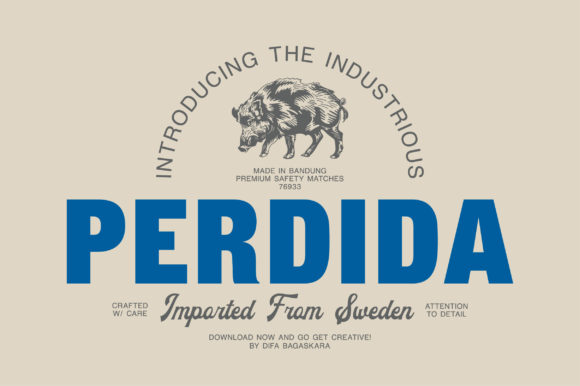
In the crowded digital landscape, where attention spans are measured in milliseconds, the choice of typography is no longer a minor aesthetic decision. It is a strategic business asset. For decades, the design world oscillated between the clean neutrality of sans-serifs and the traditional elegance of serifs. However, a significant shift is occurring in visual communication. We are moving toward a period of "assertive minimalism," where brands need to be heard without shouting, and designs need to command attention without relying solely on complex imagery. This is where Perdida enters the conversation, offering a bold and assertive display font that serves as a cornerstone for modern creative work.
The Psychology of Assertive Typography
Understanding why a font like Perdida is gaining traction requires a look at the psychology of visual processing. When a user lands on a website or picks up a physical product, the typography sets the emotional tone before a single word is read. Soft, rounded fonts often suggest approachability and playfulness, while rigid, geometric fonts imply technology and precision. Perdida, however, occupies a vital middle ground: it is bold and assertive.
Assertiveness in typography does not mean aggression. Instead, it implies confidence and clarity. In a market saturated with generic templates, consumers are subconsciously looking for brands that appear established and trustworthy. Perdida achieves this through its structural weight and distinct character. It suggests that the message it carries is important and worth the reader's time. For entrepreneurs and business owners, using a typeface with this level of presence can subconsciously elevate the perceived value of the product or service being sold.
Visual Trends: Why "Quiet Luxury" Demands Strong Display Fonts
Current design trends, particularly the resurgence of "quiet luxury" and the evolution of brutalism in web design, demand typefaces that can stand alone. We are seeing a move away from cluttered layouts. Modern UI/UX designers prefer "hero sections" dominated by a single, striking headline and a clean background.
This shift creates a specific problem: if the font is boring, the design fails. If the font is too decorative, it becomes illegible. Perdida solves this dilemma. As a display font, it is designed specifically for headlines, logos, and large-format text. It possesses the visual weight to anchor a minimalist layout, ensuring that the design feels intentional rather than empty. Whether used in a dark mode interface or over a high-contrast editorial image, Perdida provides the necessary visual hierarchy that modern users expect.
The Evolution of Digital Legibility
Historically, display fonts were often criticized for poor legibility at smaller sizes. However, font engineering has evolved. Modern display fonts like Perdida are crafted with screen rendering in mind. While it is best suited for headlines and call-to-action buttons, the letter spacing and kerning are optimized to prevent the "clumping" of letters that plagued older display typefaces. This evolution allows creators to use Perdida not just for a logo, but for pull quotes, sub-headers, and accent text throughout a digital ecosystem, maintaining consistency without sacrificing readability.
Practical Applications: Elevating Any Creation
The versatility of a font is often tested by how well it adapts to different industries. Perdida is an incredibly asset to a designer's library because of its adaptability. It does not belong to a single niche; rather, it enhances the context in which it is placed.
For Branding and Logo Design
A logo must be timeless yet contemporary. Because Perdida is assertive without being overly stylized with fleeting trends (like extreme distortion), it offers longevity. A startup using Perdida for its wordmark projects stability from day one. It bridges the gap between a tech startup needing modernity and a law firm needing gravitas.
For Marketing and Advertising
In the fast-paced world of social media marketing, the "thumb-stopping" power of an ad relies heavily on the headline. Perdida demands attention. When used in email headers or Instagram graphics, it cuts through the noise. Marketers can use the bold nature of the font to emphasize key value propositions, ensuring that the core message is communicated even if the user doesn't read the body copy.
For Editorial and Blogging
Bloggers and educators often struggle to make text-heavy pages feel dynamic. By utilizing Perdida for chapter titles or section breaks, the reading experience becomes more structured and engaging. It signals to the reader where a new thought begins, improving the overall flow of the content.
Integrating Perdida into Modern Workflows
For the modern creator, workflow efficiency is paramount. A font library must be reliable and easy to implement. Perdida is designed to be a workhorse display font. It pairs exceptionally well with neutral body text fonts—such as a light sans-serif or a classic serif—creating a natural contrast that guides the eye.
When incorporating Perdida into your workflow, consider the following practical steps:
- Establish Hierarchy: Use Perdida exclusively for H1 and H2 tags. Do not use it for body text. This restriction preserves its impact and ensures the layout remains breathable.
- Color Contrast: Because Perdida is bold, it holds up well against vibrant backgrounds. However, it shines brightest in high-contrast scenarios, such as white text on a black background or deep navy on cream.
- Letter Spacing: While Perdida is well-kerned by default, adding slight letter spacing (tracking) to all-caps versions of the font can further enhance its luxurious, high-end feel.
The Asset in Your Library
Every designer, freelancer, and business owner has experienced the frustration of searching for a font that "feels right." Often, we settle for typefaces that are merely adequate. Perdida is not an adequate font; it is a defining one. It possesses the potential to elevate any creation because it brings a level of intentionality to the design.
No matter the topic—whether you are designing a pitch deck for investors, creating a menu for a new restaurant, or building a landing page for a digital product—Perdida adapts to the gravity of the situation. It is a reminder that in a world of fleeting content, strong typography creates lasting impressions. By adding Perdida to your toolkit, you are not just adding a set of letters; you are adding a voice of authority to your visual language.