Evaluating Toktok: A Comic Display Font for Modern Design Needs
In the crowded landscape of display typography, finding a font that balances personality with professionalism is a common challenge. Toktok is a comic display typeface that positions itself precisely in this space. It aims to deliver a modern, good-looking aesthetic that avoids the pitfalls of being overly childish or illegible. This article provides a practical evaluation of Toktok, exploring its characteristics, ideal applications, and potential limitations for designers and creators.
Core Characteristics and Visual Identity
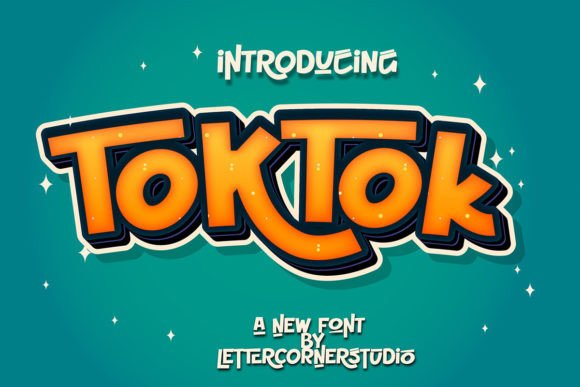
Toktok is designed as a comic display font. This classification immediately signals its primary use: for headlines, logos, and short bursts of text where impact and personality are paramount. Its visual identity is built on a foundation of rounded forms, consistent stroke weights, and a generally friendly, approachable demeanor. The letterforms often exhibit subtle quirks—a slightly uneven baseline, playful terminals, or a hand-drawn quality—that prevent it from feeling sterile or generic. This is not a font for body text; its strength lies in its ability to grab attention and convey a specific tone instantly.
The "modern" aspect of Toktok's description is critical. Unlike older comic book fonts that can feel dated or overly specific to a 1990s aesthetic, Toktok aims for a contemporary clean look. This modernity is achieved through balanced spacing, thoughtful kerning pairs, and a design that feels at home in current digital and print media. The good-looking descriptor is subjective, but in practice, it translates to a typeface that is visually pleasing without being distracting, maintaining readability at its intended sizes.
Practical Applications and Strengths
The utility of a display font like Toktok is best understood through its application across various projects. Its design philosophy makes it particularly suitable for several key areas.
- Branding and Logo Design: For brands targeting a youthful, energetic, or creative audience, Toktok can serve as an excellent logo or wordmark foundation. Its distinctive character helps with brand recall, while its modern feel ensures it doesn't pigeonhole the brand into a overly niche aesthetic. It works well for startups, lifestyle brands, and creative agencies looking to project approachability and innovation.
- Fashion and Apparel: The font's clean yet expressive nature aligns well with fashion applications. It can be effective for t-shirt printing, lookbook titles, or clothing line logos, especially for streetwear, casual wear, or children's apparel. Its readability on fabric and its ability to convey style without excessive complexity are practical strengths.
- Marketing Collateral: Toktok is a strong candidate for menus, catalogs, brochures, and social media graphics. In these contexts, it can highlight special offers, section headers, or product names, breaking the monotony of standard body text and injecting energy into the layout. Its consistency across weights and styles (if available) is crucial here for maintaining a cohesive design system.
- Digital and Editorial Design: Bloggers, publishers, and content creators can use Toktok for website headers, article titles, or newsletter banners. It helps establish a visual voice that is engaging and memorable, which is valuable in a saturated content environment. For educators, it could be used in materials aimed at younger audiences or in contexts where a less formal, more engaging tone is appropriate.
Usability, Flexibility, and Quality Considerations
A font's real-world value is determined by its technical execution and flexibility. When evaluating Toktok, several factors come into play.
Readability and Legibility: As a display font, Toktok's primary duty is to be legible at larger sizes. Its success here is generally good. The clear letter differentiation and ample spacing prevent characters from blending together. However, like most display fonts, its performance degrades significantly at small text sizes (below 14-16pt), where its decorative elements can become noise. It is not a replacement for a workhorse sans-serif or serif for long-form reading.
Character Set and Language Support: A critical, often overlooked, aspect is the font's glyph coverage. Does Toktok include a full set of uppercase and lowercase letters, numerals, punctuation, and common diacritical marks for multilingual support? A limited character set can be a major constraint for professional use. Prospective users should verify this against their project's needs. The availability of multiple weights (e.g., Regular, Bold) or styles (e.g., Italic) greatly enhances its flexibility, allowing for hierarchy and variation within a single typeface family.
Technical Quality: The font's construction—clean vector paths, proper kerning pairs, and consistent metrics—affects its performance in design software. Poor kerning can lead to awkward letter spacing, requiring manual adjustment and slowing down workflow. A well-crafted font like Toktok should integrate smoothly into professional tools like Adobe Creative Suite or Figma.
Who Stands to Benefit Most?
Toktok is not a universal solution, but for the right user and project, it can be a valuable asset.
- Freelance Designers and Creatives: For those building brand identities for clients in retail, food & beverage, or entertainment, Toktok offers a ready-made option that conveys a specific, marketable vibe. It can help streamline the conceptual phase when a "fun yet professional" font is required.
- Small Business Owners and Entrepreneurs: Particularly for those in e-commerce, cafes, or creative services, using Toktok for marketing materials can help establish a distinctive brand personality without the cost of a fully custom typeface. Its application on packaging, social media, and menus is directly relevant.
- Content Creators and Bloggers: Individuals seeking to enhance their visual branding on platforms like Instagram, YouTube, or personal blogs can use Toktok for thumbnails, headers, and graphics to increase visual consistency and appeal.
It is less suitable for corporate reports, legal documents, academic papers, or any context where traditional, neutral typography is expected and professionalism is defined by restraint rather than expression.
A Balanced Perspective on Value and Limitations
Every creative tool has its context. Toktok's long-term value depends on how well it aligns with a designer's recurring needs. If a significant portion of your work involves projects for clients or audiences that appreciate a comic-inspired, modern aesthetic, investing time to learn and implement Toktok effectively makes sense. Its reliability is tied to the quality of its source; purchasing from a reputable foundry or platform ensures proper licensing and technical support.
A potential limitation is its specificity. The very qualities that make it distinctive—its comic, display nature—can also restrict its use. Overuse in a single project can make designs feel monotonous. Pairing it wisely with a more neutral body font is essential. Furthermore, trends in typography shift. While Toktok aims for a modern feel, designers must consider whether its style will remain resonant with their target audience over the lifespan of a brand or long-term project.
In conclusion, Toktok presents itself as a competent and visually appealing comic display font. Its strengths lie in its ability to inject personality, modernity, and engagement into headlines, logos, and short-text applications across fashion, branding, and marketing. For professionals and creators whose work aligns with its aesthetic, it offers a practical and effective solution. As with any design asset, its ultimate usefulness is determined by the specific context of the project, the clarity of the brand voice, and the skill with which it is implemented. Evaluating it against these practical parameters will reveal whether Toktok is the right fit for your next creative endeavor.